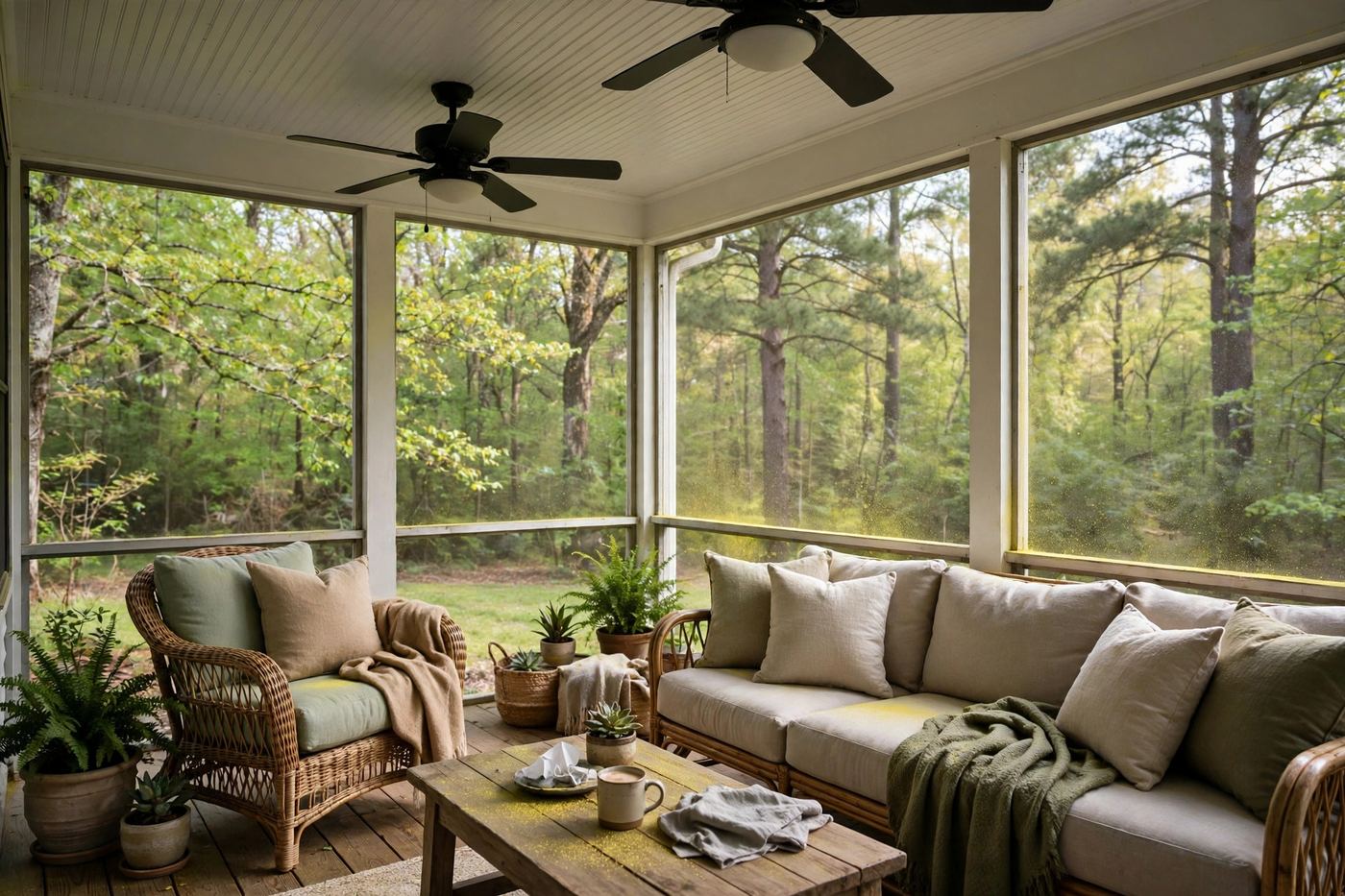
Why a screened porch wins in Marietta
- Pollen: screens cut the yellow dust that coats every open deck in spring
- Mosquitoes: a screened room is usable at dusk without sprays and candles
- Heat: ceiling fans and shade stretch the day; many porches add Eze-Breeze-style panels (brand options confirmed at design) to block wind and rain
- Connection: the best porches open directly off the kitchen — the Burnt Hickory and Indian Hills pattern
Build it as a room, not an afterthought
Roof tie-in and flashing, structure permitted like any addition, flooring that handles weather (tile or composite), electrical for fans and lighting, and drainage that keeps the house wall dry. A porch is also the natural first phase of a future sunroom or addition — designed once, used for decades.
Floors and screens: the details you feel every day
The floor decides how a porch feels underfoot. Over a deck frame, composite boards give a splinter-free surface that handles Georgia rain without annual sealing. On a slab, porcelain tile stays coolest and wipes clean after pollen season. Pressure-treated wood costs least and feels warmest, but it is the only option that asks for regular sealing.
Screen choice matters as well: standard fibreglass mesh is the economical default, heavier pet-resistant mesh suits dogs at the door, and finer mesh cuts more pollen and tiny insects at the cost of a little breeze.