Why polybutylene pipes fail in Marietta homes
Chlorine and oxidants in municipal water embrittle polybutylene from the inside, so failures arrive without the warning signs copper gives. The class-action settlement programme closed in 2009 — today, replacement is the owner's cost, which is exactly why it belongs in a remodel estimate rather than an emergency call.
How to check your home
- Look at exposed supply lines near the water heater and under sinks: grey (interior) or blue (service line) plastic pipe
- Check for PB2110 / Qest stamps on the pipe
- Note the era: 1978–1995 builds in East Cobb subdivisions like Chestnut Creek (est. 1980) and Sandy Plains are the prime window
Found it? Price the repipe inside your whole-home or kitchen scope, while walls are already open — the marginal cost is a fraction of a standalone repipe.
What replacing it looks like inside a remodel schedule
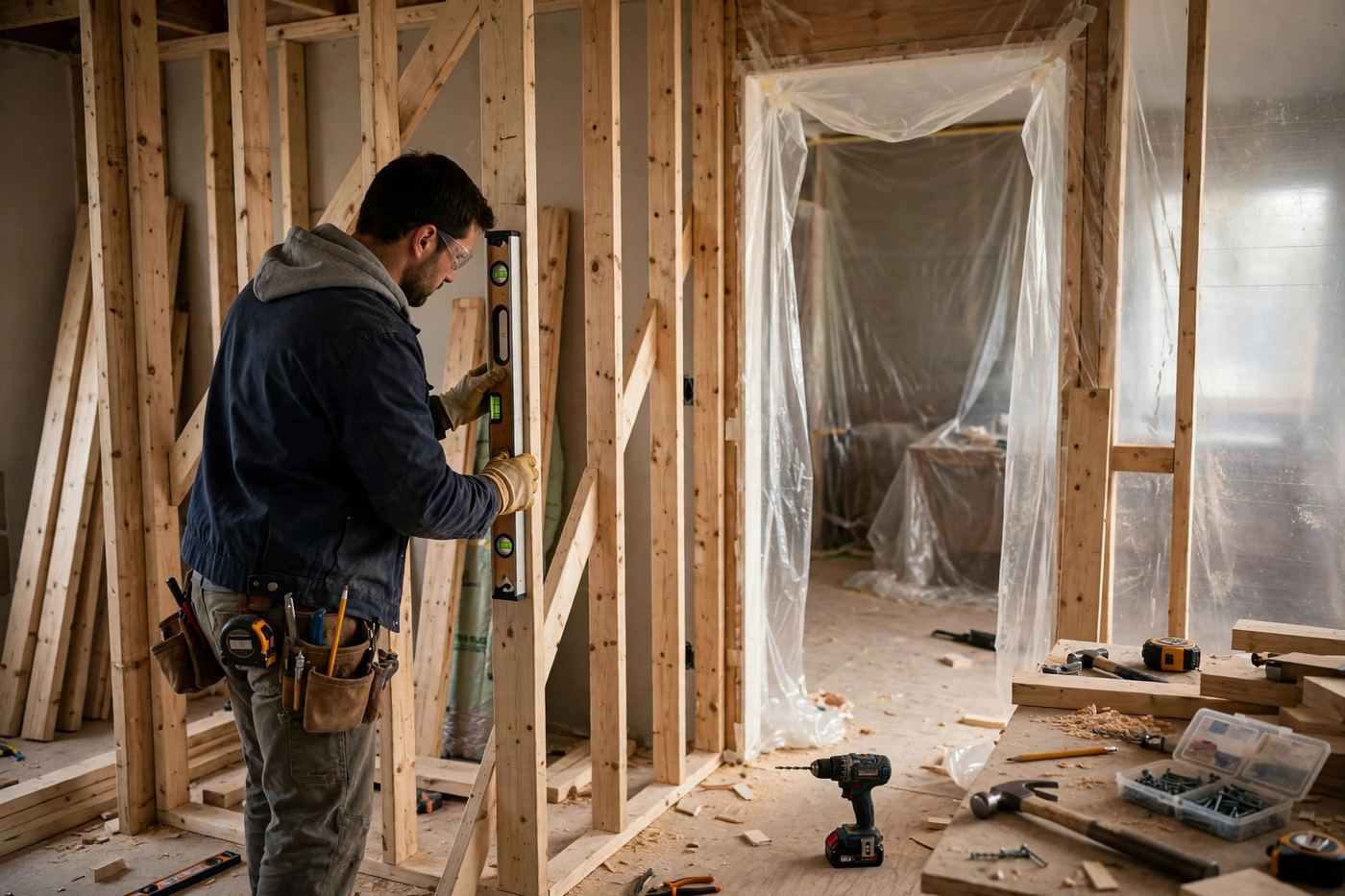
A repipe sounds drastic until it is sequenced inside a renovation already opening walls. Confirm the pipe material during design, price the full replacement as a named line in the scope, and schedule the plumbing rough-in immediately after demolition, before cabinets, tile or drywall close anything. The work is inspected as part of the permitted plumbing scope, and only then do finishes go back. Done in that order, the disruption overlaps disruption you already bought; done after a finished kitchen, every stage is undone and redone around new work.
- Full replacement, not spot repair: embrittlement happens throughout the system, so replacing only the run that leaked leaves the same risk behind new finishes
- Replace before the kitchen or bath closes: supply lines behind new tile and cabinetry are the most expensive pipe in the house to reach later
- Photograph the new runs before drywall, and keep the permit and inspection record with your home's papers for the next buyer
The decision, in one paragraph
Polybutylene installed between about 1978 and 1995 is at or past the age at which chlorine-related embrittlement produces failures, the class-action settlement programme closed in 2009, and no inspection can certify how much life a run has left. That combination — known risk, no fund, no reliable test — is why a confirmed PB system in a home you are opening up anyway is a replace-now decision, stated plainly in the estimate rather than buried as an allowance.